

AVM Embolization & Tumor Ablation
Advanced Image-Guided Treatments for Vascular Malformations & Tumors
Interventional Radiology offers cutting-edge, minimally invasive treatments for Arteriovenous Malformations (AVMs) and various benign and cancerous tumors. AVM Embolization is used to block abnormal blood vessels and reduce the risk of bleeding, while Tumor Ablation destroys tumors using heat or cold without the need for major surgery.
Performed under ultrasound, CT scan, fluoroscopy, or angiographic guidance, these procedures provide precise treatment with less pain, minimal scarring, faster recovery, and shorter hospital stays.
AVM Embolization
What is AVM Embolization?
An Arteriovenous Malformation (AVM) is an abnormal connection between arteries and veins that disrupts normal blood flow. AVMs can occur in the brain, spine, or other parts of the body and may cause pain, bleeding, swelling, seizures, or other serious complications.
AVM Embolization is a minimally invasive procedure in which a thin catheter is guided into the abnormal blood vessels. Special embolic materials such as medical glue, liquid embolic agents, particles, or coils are then delivered to block the abnormal blood flow.
Depending on the type and location of the AVM, embolization may be used as the primary treatment or before surgery or radiosurgery.
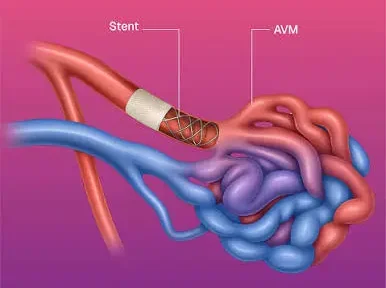
Conditions Treated
- Brain AVMs
- Spinal AVMs
- Peripheral AVMs
- Facial vascular malformations
- Extremity AVMs
- Congenital vascular malformations
- AVM-related bleeding
- Painful vascular malformations
Benefits of AVM Embolization
- Reduces abnormal blood flow
- Lowers the risk of bleeding
- Minimally invasive alternative to surgery
- Preserves healthy surrounding tissue
- Relieves pain and swelling
- Short hospital stay
- Faster recovery
- Can improve the success of surgery or radiosurgery
Tumor Ablation
What is Tumor Ablation?
Tumor Ablation is a minimally invasive procedure that destroys tumors by applying extreme heat or cold directly to the abnormal tissue. Under image guidance, a thin probe is inserted into the tumor, where energy is used to destroy cancer cells while preserving as much healthy tissue as possible.
Depending on the tumor type and location, different ablation techniques may be used, including:
- Radiofrequency Ablation (RFA)
- Microwave Ablation (MWA)
- Cryoablation (Cold Ablation)
Tumor ablation is an effective treatment for selected patients who are not suitable candidates for surgery or who require a less invasive treatment option.
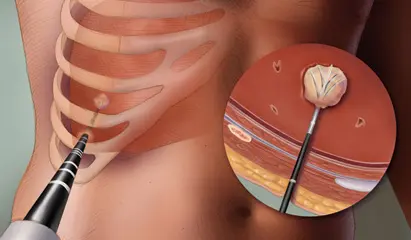
Conditions Treated
- Liver tumors
- Kidney tumors
- Lung tumors
- Bone tumors
- Soft tissue tumors
- Benign tumors
- Metastatic tumors
- Recurrent tumors
Benefits of Tumor Ablation
- Minimally invasive treatment
- No major surgery
- Preserves healthy tissue
- Minimal pain
- Short hospital stay
- Faster recovery
- Can be repeated if necessary
- Excellent local tumor control in selected patients
How Are These Procedures Performed?
Both AVM Embolization and Tumor Ablation are performed in a specialized Interventional Radiology suite using advanced imaging guidance.
Procedure Overview
- Local anesthesia, sedation, or general anesthesia is administered depending on the procedure.
- A tiny skin puncture is made.
- For AVM Embolization, a catheter is guided through the blood vessels to the abnormal vascular malformation, where embolic materials are injected to block abnormal blood flow.
- For Tumor Ablation, a thin ablation probe is placed directly into the tumor under ultrasound or CT guidance, and thermal energy or extreme cold is applied to destroy the abnormal tissue.
- Imaging confirms successful treatment before the procedure is completed.
Most procedures are completed within 1 to 3 hours, and many patients are discharged within 24 hours, depending on the complexity of the treatment.
Why Choose Our Interventional Radiology Services?
Our Interventional Radiology team specializes in advanced image-guided treatments for vascular malformations and tumors, using the latest technologies to provide safe, effective, and personalized care.
Our Advantages
- Experienced Interventional Radiologist
- Advanced CT, ultrasound, fluoroscopy, and angiography guidance
- High procedural accuracy
- Minimally invasive techniques
- Personalized treatment planning
- Organ-preserving therapies
- Faster recovery
- Reduced pain and scarring
- Lower risk of complications
- Comprehensive follow-up care
FREQUENTLY ASKED QUESTIONS
An Arteriovenous Malformation (AVM) is an abnormal connection between arteries and veins that can disrupt normal blood flow and increase the risk of bleeding or other complications.
No. AVM Embolization is a minimally invasive image-guided procedure performed through a small catheter inserted into a blood vessel, avoiding large surgical incisions.
Tumor Ablation is used to destroy selected benign and cancerous tumors using heat or cold, often as an alternative to surgery or when surgery is not feasible.
The procedure is performed under local anesthesia with sedation or general anesthesia, so patients usually experience minimal discomfort during treatment.
For selected patients with small, localized tumors, tumor ablation can provide excellent local tumor control and may be used with curative intent. In other cases, it may help reduce tumor size, relieve symptoms, or complement other cancer treatments.
Most patients recover quickly and can return to normal activities within a few days, depending on the treated condition and overall health.