

Brain Stroke Treatment in Guntur: Emergency Care, Clot Removal and Recovery
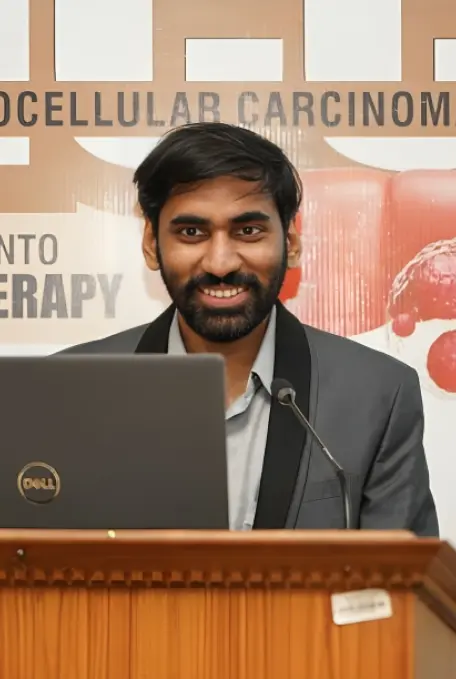
Brain stroke treatment in Guntur works best when it starts within minutes of the first symptom. Dr. G. P. Venkat Choudary is a Consultant Interventional Radiologist at KIMS-SIKHARA Hospitals who treats blocked brain arteries with minimally invasive, image-guided procedures such as mechanical thrombectomy. Stroke care is a team effort, and his part is the procedure that reopens a blocked artery.
A suspected stroke is an emergency. If someone has sudden face drooping, arm weakness or speech trouble, call 108 or 112 and go to the nearest hospital with emergency care and a CT scan. Do not wait for a clinic appointment.
- MBBS, MD Radiology, DrNB Interventional Radiology
- Consultant Interventional Radiologist, KIMS-SIKHARA Hospitals
- 5+ years of experience
What Is a Brain Stroke?
A brain stroke happens when blood flow to part of the brain is cut off or a brain blood vessel bursts. Brain cells begin to die within minutes, which is why doctors say time is brain. There are two main types:
- Ischemic stroke: a clot blocks an artery that feeds the brain. This is the more common type.
- Haemorrhagic stroke: a weakened vessel bleeds into or around the brain, for example because of long-standing high blood pressure or an aneurysm.
A national Indian registry of 30 hospitals reported about 60% ischemic strokes and about 34% brain haemorrhages. The two types are treated very differently, so a brain scan always comes before any treatment decision. A temporary blockage that clears by itself, called a TIA or mini-stroke, is also a warning sign and needs urgent assessment.
Stroke Symptoms and Who Needs Urgent Evaluation
Remember BE-FAST:
- Balance: sudden loss of balance or dizziness
- Eyes: sudden blurred, double or lost vision
- Face: one side of the face drooping
- Arm: weakness or numbness in one arm or leg
- Speech: slurred speech or trouble understanding
- Time: note when symptoms began and call 108 or 112 at once
A sudden severe headache or confusion can also signal a stroke. Common risk factors are high blood pressure, diabetes, tobacco use, high cholesterol, an irregular heartbeat (atrial fibrillation), obesity, heavy alcohol use and a family history of stroke. Stroke is not only a disease of older age: the same registry found that about one in seven patients was younger than 45.
How Brain Stroke Treatment Works, Step by Step
The path depends on the stroke type, the time since symptoms began and the scan findings.
- Emergency assessment: the team checks airway, blood pressure and blood sugar and records when symptoms started.
- Brain imaging: a CT scan separates ischemic from haemorrhagic stroke. CT or MR angiography shows whether a large artery is blocked, and perfusion imaging can show how much brain tissue is still salvageable.
- Clot-dissolving medicine: eligible ischemic stroke patients may receive tenecteplase or alteplase through a vein, usually within 4.5 hours of onset. Advanced imaging can extend this window in selected patients.
- Mechanical thrombectomy: when a large artery is blocked, a thin catheter is guided under X-ray from the groin or wrist to the brain artery. A stent retriever or suction catheter then removes the clot. Guidelines support thrombectomy within 6 hours for eligible patients and up to 24 hours in carefully selected ones, and it should not be delayed to wait for the effect of medicine.
- Treatment of bleeding strokes: depending on the cause, this may involve blood pressure control, aneurysm coiling, AVM embolization or neurosurgery.
- Monitoring and prevention: care continues in a stroke unit or ICU, followed by rehabilitation and steps to prevent another stroke.
Benefits of Mechanical Thrombectomy for Stroke
For people with a large-vessel blockage, thrombectomy can restore blood flow when medicine alone may not be enough. A pooled analysis of five randomised trials (1,287 patients) found that thrombectomy significantly reduced disability at 90 days compared with standard care, including in patients aged 80 or older. In the DAWN trial of selected patients treated 6 to 24 hours after they were last well, 49% of thrombectomy patients were functionally independent at 90 days, compared with 13% on medical therapy alone.
Other practical advantages are a small puncture instead of open brain surgery and a treatment window that can reach 24 hours in selected patients. Benefit depends on how early treatment starts and how much brain tissue can still be saved. Results vary and no outcome can be guaranteed.
Stroke Treatment Options Compared
| Option | Used for | Main advantage | Main limits |
|---|---|---|---|
| Clot-dissolving medicine (IV) | Ischemic stroke, usually within 4.5 hours | Quick to give in an emergency room, no catheter | Time-limited, bleeding risk, less effective for large clots |
| Mechanical thrombectomy | Ischemic stroke with a large-vessel blockage | Removes the clot directly, longer window in selected patients | Needs a specialised team and imaging, suits only some patients |
| Medicines and risk control | Mild or non-disabling stroke, prevention after any ischemic stroke | Widely available, long-term protection | Does not remove a large clot |
| Bleeding-stroke treatment | Haemorrhagic stroke | Targets the cause of the bleed | Choice depends on cause and location |
| Rehabilitation | After every stroke | Rebuilds function and independence | Does not treat the blockage itself |
Who May Be a Candidate for Thrombectomy
Thrombectomy is considered when a scan confirms an ischemic stroke from a blocked large brain artery and the symptoms and imaging suggest that brain tissue can still be saved. The stroke team looks at symptom severity, time since the person was last well, the artery involved, the size of established damage and the person's earlier health and independence. Haemorrhagic strokes, small-vessel strokes and strokes where most tissue is already lost usually need a different approach. Eligibility rules keep evolving as new trials report, so each decision is made case by case.
Risks and Safety of Stroke Treatment
Every stroke treatment has risks, and an untreated stroke carries its own risk of death or lasting disability. Possible complications of thrombectomy include:
- Bleeding in the brain
- Injury to a blood vessel, such as a tear
- Clot fragments moving to another brain artery
- Bleeding or bruising at the catheter site
- Reaction to contrast dye or kidney stress
- Risks linked to sedation or anaesthesia
- The artery not reopening, or closing again
Clot-dissolving medicine mainly adds a risk of bleeding. In the pooled trials, the rate of symptomatic brain bleeding did not differ significantly between thrombectomy and standard care. Whenever time allows, the team explains benefits and risks to the family before the procedure.
Recovery After a Brain Stroke
Recovery varies widely. After thrombectomy, patients are monitored in an ICU or stroke unit, with checks on neurological status, blood pressure and the puncture site. Rehabilitation should begin as early as it is safe and may include physiotherapy, occupational therapy, speech and swallowing therapy, and support for mood, memory and caregivers. To lower the chance of another stroke, doctors may advise medicines that prevent clots, tight control of blood pressure, diabetes and cholesterol, stopping tobacco and regular follow-up. Some people recover almost fully, while others live with lasting weakness or speech problems.
Brain Stroke Treatment Cost in Guntur: What Affects the Bill
The cost of brain stroke treatment in Guntur cannot be quoted without examining the patient, because it depends on the type of stroke and the care needed. The main factors are:
- Stroke type and treatment: medicines, clot-dissolving drug, thrombectomy or treatment for a bleed
- Imaging: CT, CT angiography, MRI or perfusion scans
- Devices and consumables used in a procedure
- Days in ICU, stroke unit and ward, and the room category
- Complications or additional procedures
- Rehabilitation, follow-up visits and long-term medicines
- Insurance or government scheme coverage, which varies by hospital and policy
Ask the hospital billing team for a written estimate and what it includes. In an emergency, go to the hospital first and do not delay treatment to compare prices.
Choosing a Brain Stroke Specialist Doctor in Guntur
Stroke care involves several specialists. Neurologists diagnose stroke and manage medical treatment. Interventional radiologists and neurointerventionists perform catheter-based clot removal and aneurysm treatment. Neurosurgeons operate when surgery is needed. Useful questions to ask:
- Does the hospital have round-the-clock CT or MRI and a stroke team?
- Are clot-dissolving medicine and thrombectomy both available, and who performs them?
- Is there an ICU and a rehabilitation plan?
- Will the doctor explain risks, alternatives and uncertainties plainly?
Be cautious about anyone who guarantees results or promises a cure.
Why Choose Dr. G. P. Venkat Choudary
Dr. G. P. Venkat Choudary (MBBS, MD Radiology, DrNB Interventional Radiology) is a Consultant Interventional Radiologist at KIMS-SIKHARA Hospitals, Agatha Varappadu, Guntur, with 5+ years of experience. He trained in neuro and vascular interventional radiology at Max Super Specialty Hospital, Saket, New Delhi. His listed neurovascular services include mechanical thrombectomy for acute stroke, intracranial stenting, carotid artery stenting, aneurysm coiling and AVM embolization. He is a life member of the Society of Therapeutic Neuro Interventions and the Indian Society of Vascular and Interventional Radiology, presented neurovascular cases at ISVIR 2023 and has received ISVIR recognition for a best paper (2022) and a scientific poster (2023). Patients can expect a plain explanation of the diagnosis, options and risks before any decision.
Read more about Dr. Choudary, see his neurovascular services or read our guide to mechanical thrombectomy for stroke.
Frequently Asked Questions About Brain Stroke Treatment
Where can I get brain stroke treatment in Guntur?
Go to the nearest hospital with emergency care and a CT scan, and call 108 or 112 for an ambulance. Dr. G. P. Venkat Choudary consults at KIMS-SIKHARA Hospitals, Agatha Varappadu, Guntur, and treats blocked brain arteries with thrombectomy. Clinic hours are not an emergency service, so a stroke happening now needs emergency care first.
Which doctor treats a brain stroke?
Stroke care is a team effort. Neurologists diagnose and manage medical treatment, interventional radiologists remove clots and treat aneurysms with catheters, and neurosurgeons operate when needed. The right specialist depends on the stroke type and scan findings.
How long do you have to treat a stroke?
As fast as possible. Clot-dissolving medicine is usually given within 4.5 hours of onset, and advanced imaging can extend this to about 9 hours in selected patients. Thrombectomy can be done up to 24 hours in carefully selected patients.
What is a thrombectomy for stroke?
Mechanical thrombectomy is a minimally invasive procedure that removes a clot from a brain artery. A catheter is passed through a small puncture, usually in the groin or wrist, and a stent retriever or suction catheter removes the clot under X-ray guidance.
How much does brain stroke treatment cost in Guntur?
The cost depends on the stroke type, imaging, the treatment used, days in ICU or ward, any complications and insurance or scheme coverage. It cannot be quoted without examining the patient. Ask the hospital for a written estimate, and do not delay emergency care to compare prices.
Is thrombectomy safe?
It carries risks, including bleeding in the brain, blood vessel injury, clot fragments moving to another artery and problems at the puncture site. The team weighs these against the risk of leaving a large blockage untreated. No treatment is risk free and results cannot be guaranteed.
Can a person recover fully after a stroke?
Some people recover almost fully, while others live with weakness, speech or memory problems. Recovery depends on the stroke type, how quickly treatment started, the brain area affected and rehabilitation, which should begin early.
What are the warning signs of a stroke?
Use BE-FAST: sudden loss of balance, eye or vision problems, face drooping, arm or leg weakness, speech difficulty, and time to call 108 or 112. A sudden severe headache or confusion is also a warning sign.
Talk to Dr. G. P. Venkat Choudary About Brain Stroke Treatment in Guntur
If you or a family member needs advice on brain stroke treatment in Guntur, recovery planning or preventing a second stroke, book a consultation. For a stroke happening now, call 108 or 112.
Address: KIMS-SIKHARA Hospitals, Mangalagiri Road, near Best Price, Agatha Varappadu, Guntur, Andhra Pradesh 522001
Phone and WhatsApp: +91 79936 64215
Clinic hours: Monday to Saturday, 10 AM to 5 PM (not an emergency service)
Prefer not to fill a form? Call +91 79936 64215 or message on WhatsApp.
Medical disclaimer
This page is for general information and does not replace medical advice, diagnosis or treatment. Stroke is a medical emergency, so call 108 or 112 without delay. Treatment decisions depend on each patient's scans and condition, and results vary.
References
- Prabhakaran S, et al. 2026 Guideline for the Early Management of Patients With Acute Ischemic Stroke: A Guideline From the American Heart Association/American Stroke Association. Stroke. Published online 26 Jan 2026. doi:10.1161/STR.0000000000000513. Supports: thrombolysis windows, extended-window selection, thrombectomy up to 24 hours, no delay of thrombectomy for thrombolysis.
- Goyal M, et al; HERMES collaborators. Endovascular thrombectomy after large-vessel ischaemic stroke: a meta-analysis of individual patient data from five randomised trials. Lancet. 2016;387:1723-1731. doi:10.1016/S0140-6736(16)00163-X. Supports: reduced disability at 90 days, benefit in patients aged 80 or older, no significant difference in symptomatic brain bleeding.
- Nogueira RG, et al. Thrombectomy 6 to 24 hours after stroke with a mismatch between deficit and infarct (DAWN trial). N Engl J Med. 2018;378:11-21. Supports: 49% vs 13% functional independence at 90 days.
- National stroke registry of 30 Indian hospitals (2020 to 2022), as reported by South First: https://thesouthfirst.com/health/one-in-seven-stroke-patients-in-india-is-under-45-over-half-die-study/ . Supports: ischemic and haemorrhagic share, one in seven patients under 45. Primary publication still to be located.
- Kleindorfer DO, et al. 2021 Guideline for the Prevention of Stroke in Patients With Stroke and Transient Ischemic Attack. Stroke. 2021;52:e364-e467. Supports: secondary prevention statements.
- Winstein CJ, et al. Guidelines for Adult Stroke Rehabilitation and Recovery. Stroke. 2016;47:e98-e169. Supports: early rehabilitation statements.
- American Stroke Association. Warning signs of stroke (BE-FAST). Supports: symptom list.