
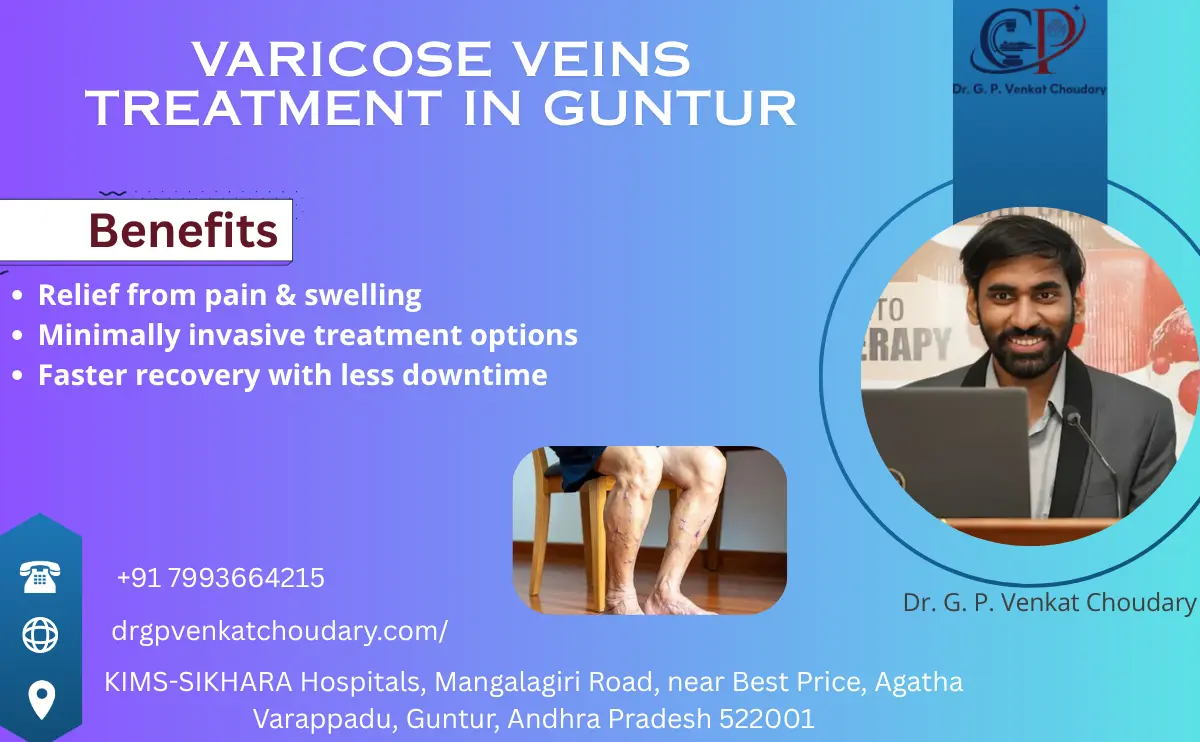
Varicose veins are enlarged, twisted veins that most commonly develop in the legs when blood does not flow efficiently back toward the heart. They may appear as blue or purple veins beneath the skin and can be associated with heaviness, aching, swelling, itching, or discomfort. While some varicose veins cause mainly cosmetic concerns, others can produce persistent symptoms and may require medical evaluation.
For patients looking for Varicose Veins Treatment in Guntur, modern vascular and interventional radiology services can provide several minimally invasive treatment options. The appropriate approach depends on the affected veins, severity of venous reflux, symptoms, medical history, and findings on diagnostic imaging.
Non Surgical Varicose Veins Treatment may be considered for suitable patients who want an alternative to traditional surgical vein removal. One commonly used minimally invasive approach is Varicose Veins Laser Treatment, although other endovenous techniques may also be appropriate.
What Are Varicose Veins and When Should You Seek Treatment?
Varicose veins develop when valves inside the veins do not work properly. Normally, these valves help direct blood upward toward the heart. When they become weak or fail to close properly, blood can flow backward and accumulate in the veins. This increased pressure can gradually enlarge and twist the affected veins.
Common symptoms of varicose veins
Symptoms can vary from one person to another. Common signs include:
- Enlarged, twisted or bulging veins
- Aching or heaviness in the legs
- Leg swelling, particularly after prolonged standing
- Burning or throbbing sensations
- Itching around affected veins
- Muscle cramps, especially at night
- Skin discoloration around the ankle
- Tired or uncomfortable legs after extended periods of standing
Not every visible vein requires treatment. However, persistent pain, swelling, skin changes, bleeding from a varicose vein, or a non-healing sore should be medically evaluated.
What causes varicose veins?
Several factors can contribute to venous valve dysfunction, including:
- Family history of varicose veins
- Increasing age
- Pregnancy
- Prolonged standing or sitting
- Obesity or excess body weight
- Reduced physical activity
- Previous vein problems or blood clots
A proper evaluation helps determine whether symptoms are caused by superficial varicose veins, venous reflux, or another vascular condition.
How are varicose veins diagnosed?
Diagnosis usually begins with a medical history and physical examination. A duplex ultrasound is commonly used to assess blood flow, identify reflux, examine the affected veins, and help determine the most suitable treatment.
For people searching for Varicose Veins Treatment in Guntur, a specialist assessment is important because treatment should not be selected solely on the appearance of the veins.
Non-Surgical Varicose Veins Treatment Options
Treatment depends on the location and severity of venous disease. In appropriate patients, minimally invasive techniques can treat the underlying abnormal vein while avoiding conventional surgical vein stripping.
Varicose Veins Laser Treatment
Varicose Veins Laser Treatment is an endovenous procedure in which laser energy is delivered through a thin catheter placed inside the affected vein. The energy heats the vein wall, causing the treated vein to close. Blood can then redirect through healthier veins.
The procedure is generally performed under image guidance and local anaesthesia. The exact technique, suitability, and expected outcome depend on the patient’s ultrasound findings and overall health.
Radiofrequency ablation
Radiofrequency ablation uses controlled thermal energy rather than laser energy to close an abnormal vein. It is another endovenous treatment option for selected patients with venous reflux.
Sclerotherapy
Sclerotherapy involves injecting a medical solution into selected veins to make them close and gradually become less prominent. It may be used for certain smaller varicose or spider veins, depending on the clinical situation.
Compression and lifestyle measures
Compression stockings, regular walking, maintaining a healthy weight, avoiding prolonged periods of standing or sitting, and elevating the legs may help manage symptoms. These measures may be recommended before or alongside an interventional treatment, depending on the patient’s condition.
The goal of Varicose Veins Treatment in Guntur is not simply to make veins look less prominent. A comprehensive treatment plan should address symptoms and, where appropriate, the underlying venous reflux.
Is non-surgical treatment suitable for everyone?
No. The most appropriate treatment depends on the patient’s venous anatomy, ultrasound findings, symptoms, vein size and other medical factors. A specialist should determine whether laser ablation, radiofrequency ablation, sclerotherapy, conservative management, or another approach is appropriate.
Benefits, Recovery and Comparison of Treatment Options
Modern minimally invasive procedures may offer several practical benefits compared with conventional surgical approaches. However, the benefits and risks vary between patients.
Potential benefits
For appropriately selected patients, minimally invasive treatment may offer:
- Small access point rather than a large surgical incision
- Treatment of the underlying abnormal vein
- Less tissue disruption than traditional vein-stripping surgery
- Usually shorter recovery than conventional surgery
- Ability to return to normal activities relatively quickly in many cases
- Treatment planned according to ultrasound findings
These advantages do not mean that every patient will have the same recovery or outcome. Individual factors must always be considered.
Recovery after treatment
Recovery varies according to the procedure performed and the patient’s health. Many endovenous procedures are performed as outpatient treatments, allowing patients to return home after observation.
Patients may be advised to walk regularly after the procedure and follow specific instructions regarding compression garments, medication, wound care, and physical activity.
Some temporary effects can occur, such as mild discomfort, bruising, tightness, or swelling around the treated area. The treating specialist will explain which symptoms are expected and which require medical attention.
Varicose vein treatment comparison
| Treatment | Typical use | Approach |
| Laser ablation | Selected larger refluxing veins | Minimally invasive |
| Radiofrequency ablation | Selected venous reflux | Minimally invasive |
| Sclerotherapy | Selected smaller veins | Injection-based |
| Compression therapy | Symptom management | Non-procedural |
| Surgical treatment | Selected advanced cases | Surgical |
The right choice is based on clinical examination and duplex ultrasound rather than simply choosing the least invasive option.
For patients considering Varicose Veins Treatment in Guntur, discussing the available options with a vascular or interventional radiology specialist can help establish a treatment plan appropriate for their individual condition.
Frequently Asked Questions
1. What is the most common treatment for varicose veins?
Treatment depends on the type and severity of venous disease. Endovenous laser or radiofrequency ablation may be suitable for selected patients with venous reflux, while other patients may benefit from sclerotherapy, compression therapy, or surgery.
2. Is varicose vein treatment possible without surgery?
Yes. Non Surgical Varicose Veins Treatment includes procedures such as endovenous laser ablation, radiofrequency ablation, and sclerotherapy for appropriately selected patients.
3. Is Varicose Veins Laser Treatment painful?
The procedure is generally performed using local anaesthesia, which helps reduce discomfort during treatment. Some patients may experience temporary soreness, bruising, or tightness afterward.
4. How is varicose vein treatment diagnosed?
Duplex ultrasound is commonly used to examine venous blood flow and identify reflux. The results help the specialist determine whether intervention is required and which treatment may be appropriate.
5. How long does recovery take after laser treatment?
Recovery varies depending on the individual and procedure. Many patients can resume routine activities relatively quickly, but the treating specialist will provide personalized instructions about walking, exercise and other activities.
6. Can varicose veins come back after treatment?
Treatment can close or remove the targeted abnormal vein, but it does not eliminate the possibility of developing new varicose veins in the future. Follow-up and management of underlying venous disease may be recommended.
7. Should I consult a specialist for varicose veins?
A specialist consultation is recommended when veins are painful, associated with swelling or skin changes, bleeding, or causing persistent symptoms. Early assessment can help identify the underlying cause.
8. Can I find varicose vein treatment near me in Guntur?
Patients looking for treatment near me can seek evaluation from a qualified vascular or interventional radiology specialist in Guntur. A clinical examination and ultrasound can help determine the appropriate treatment.
9. Does varicose vein treatment have a fixed cost?
No. Treatment costs vary according to the patient’s condition, number and type of veins involved, diagnostic requirements, procedure selected, hospital facilities, and other individual factors. A specialist can provide a more appropriate estimate after evaluation.
Varicose Veins Treatment in Guntur: Consult a Specialist
Choosing Varicose Veins Treatment in Guntur should begin with an accurate diagnosis rather than selecting a procedure based only on online information. The treatment approach should consider the underlying venous problem, symptoms, ultrasound findings, medical history, and individual treatment goals.
Dr. G.P. Venkat Choudary, Neuro and Vascular Interventional Radiologist, provides specialist evaluation for vascular conditions and minimally invasive treatment options. Patients can discuss their symptoms, diagnostic findings, and suitability for procedures such as endovenous treatment during consultation.
If you are experiencing persistent leg pain, swelling, prominent veins, heaviness, or other symptoms associated with varicose veins, consider scheduling an evaluation to understand the cause and available treatment options.
Book an appointment with Dr. G.P. Venkat Choudary – Neuro and Vascular Interventional Radiologist.
Phone: 079936 64215
Email: drgpvenkatchoudary@gmail.com
Location: KIMS-SIKHARA Hospitals, Mangalagiri Road, near Best Price, Agatha Varappadu, Guntur, Andhra Pradesh 522001
One thought on “Varicose Veins Treatment in Guntur”