


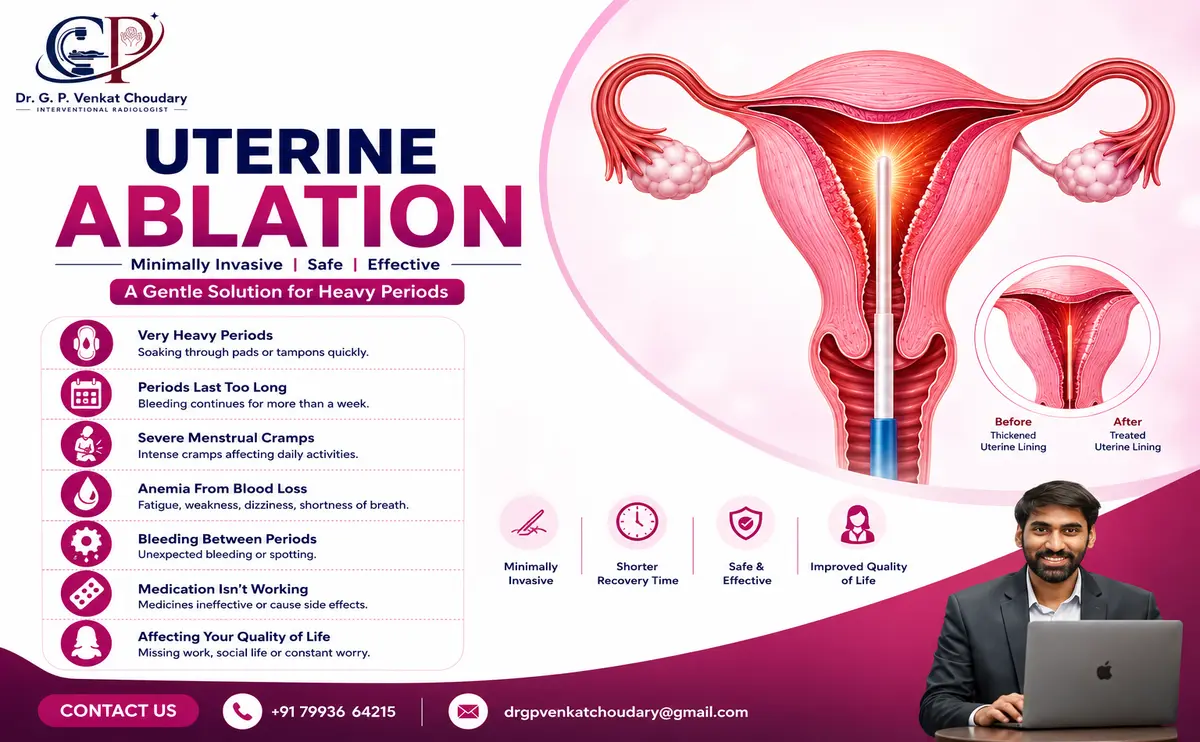
Heavy menstrual bleeding can be more than an inconvenience. When periods are unusually heavy, prolonged, painful, or interfere with work and everyday activities, it may be time to discuss treatment options with a specialist. One minimally invasive option for appropriately selected women is uterine ablation, more precisely called endometrial ablation.
Endometrial ablation works by destroying or removing the lining of the uterus (endometrium), with the goal of reducing excessive menstrual bleeding. It does not remove the uterus and does not generally affect hormone levels.
This guide explains 7 Signs You May Need Uterine Ablation, how doctors determine whether the procedure is appropriate, what the treatment involves, expected benefits and recovery, and factors that can influence Uterine Ablation Treatment Cost.
Introduction: What Is Uterine Ablation?
Uterine ablation, commonly referring to endometrial ablation, is a minimally invasive treatment designed primarily for women with heavy menstrual bleeding when medicines or other conservative treatments have not provided adequate relief.
The procedure treats the uterine lining rather than removing the uterus. Depending on the technique used, thermal energy, radiofrequency energy, heated fluid, or another method may be used to destroy the endometrium. The objective is to make periods significantly lighter or, in some women, stop menstrual bleeding altogether.
It is important to understand that Uterine Ablation is not a contraceptive procedure. Pregnancy can still occur after treatment and may carry significant risks, so reliable contraception is generally recommended until menopause.
Who may be considered for the procedure?
Uterine ablation may be considered when:
- Heavy menstrual bleeding is affecting quality of life.
- Medication has not provided sufficient relief.
- The woman does not desire future pregnancy.
- The uterus is anatomically suitable for the selected procedure.
- Serious causes of abnormal bleeding have been investigated or ruled out.
Treatment decisions should be individualized after discussing the expected results, alternatives, risks, and personal preferences with a qualified specialist.
Symptoms of Uterine Ablation
1. Your periods are unusually heavy
One of the most important indications is persistent heavy menstrual bleeding. You may find yourself changing sanitary products very frequently, using multiple pads, or worrying about leakage throughout the day.
According to the American College of Obstetricians and Gynecologists, soaking through a pad or tampon every hour for several hours, needing to change protection during the night, or bleeding for more than seven days can indicate heavy menstrual bleeding.
Uterine Ablation may be considered when this heavy bleeding continues despite appropriate medical treatment.
2. Your periods last longer than a week
Periods that regularly continue for more than seven days can become physically and emotionally exhausting. Prolonged blood loss can also contribute to iron deficiency and anemia.
If long-lasting periods repeatedly interfere with your routine, discuss the underlying cause and available treatment options with a doctor.
3. Heavy bleeding is causing anemia
Persistent blood loss can lower iron stores and red blood cell levels. Symptoms of anemia may include tiredness, weakness, dizziness, headaches, shortness of breath, or reduced ability to concentrate.
If tests confirm anemia related to heavy menstrual bleeding, controlling the source of blood loss becomes particularly important. Endometrial ablation can be considered in appropriately selected women when conservative measures have not worked.
4. Medication has not controlled your bleeding
Doctors commonly try medication before recommending a procedure. Depending on the cause and individual circumstances, treatment may include hormonal medicines, non-hormonal medicines, or an intrauterine device.
When these options fail, are unsuitable, or cause unwanted effects, a specialist may discuss procedural treatments. NICE guidance lists second-generation endometrial ablation among surgical options for appropriate women with heavy menstrual bleeding when treatment has been unsuccessful or symptoms are severe.
5. Heavy periods are disrupting your daily life
Your quality of life matters. If you regularly miss work, avoid travel, cancel social activities, struggle to sleep, or plan your day around access to a bathroom because of menstrual bleeding, the problem deserves medical attention.
7 Signs You May Need Uterine Ablation should not be interpreted as a self-diagnosis checklist. The decision depends on the cause of bleeding, your medical history, uterine anatomy, fertility plans, and previous treatments.
6. You experience troublesome bleeding associated with certain uterine conditions
Fibroids, polyps, adenomyosis, hormonal changes, and other conditions can contribute to abnormal or heavy menstrual bleeding.
However, ablation is not automatically appropriate for every woman with fibroids or another uterine condition. The size, location, and characteristics of fibroids or other abnormalities can affect treatment selection. NICE recommends specialist assessment for women with larger fibroids and individualized discussion of treatment options.
7. You want a uterus-preserving alternative to more extensive surgery
Some women with severe heavy bleeding want to explore less invasive options before considering hysterectomy.
Uterine ablation does not remove the uterus. However, it is not appropriate for everyone, and it should not be viewed simply as a replacement for hysterectomy. Your doctor will compare the expected benefits, limitations, risks, and likelihood of needing further treatment before recommending an approach.
Causes, Diagnosis, Treatment and Procedure
Common causes of heavy menstrual bleeding
Heavy menstrual bleeding can have several causes, including:
- Uterine fibroids
- Endometrial polyps
- Adenomyosis
- Hormonal changes
- Ovulatory disorders
- Certain medications or bleeding disorders
- Changes associated with perimenopause
- Less commonly, precancerous or cancerous conditions
Finding the cause is essential before selecting treatment. Heavy menstrual bleeding should not simply be assumed to require ablation.
How is the condition diagnosed?
Your doctor may review your menstrual history, symptoms, previous treatments, medical conditions, medications, and pregnancy plans. Depending on your symptoms, evaluation may include:
- Physical and pelvic examination
- Blood tests, including assessment for anemia
- Pregnancy testing when appropriate
- Pelvic ultrasound
- Assessment of the uterine cavity
- Endometrial sampling or biopsy when clinically indicated
The purpose is to identify the cause of bleeding and ensure that ablation is medically appropriate.
How is Uterine Ablation performed?
The exact procedure depends on the technology available and the patient’s anatomy. In general, the specialist accesses the uterus through the vagina and cervix rather than making a large abdominal incision.
The treatment device is positioned inside the uterus, and controlled energy or another approved technique is used to destroy the endometrial lining. Different ablation systems use different mechanisms.
The procedure is generally much less invasive than hysterectomy because the uterus itself is not removed. However, the appropriate technique should be selected by a qualified specialist after assessment.
When is Uterine Ablation not suitable?
Uterine ablation is generally not recommended for women who want to become pregnant in the future. It may also be inappropriate in certain uterine conditions, active pelvic infection, or when uterine cancer or an increased risk of endometrial cancer has not been appropriately evaluated.
Benefits, Recovery, Comparison and FAQs
Benefits of Uterine Ablation
Potential benefits include:
- Reduced menstrual blood loss
- Lighter periods
- In some women, complete absence of periods
- No removal of the uterus
- Minimally invasive treatment
- Potentially faster recovery than major uterine surgery
- Improvement in daily activities and quality of life
Results vary. Some women experience substantial improvement, while others may continue to have periods or eventually require additional treatment. ACOG notes that ablation may reduce bleeding to normal or lighter levels, but it does not guarantee that periods will stop.
Recovery After Uterine Ablation
Recovery depends on the technique used and individual health. Many women can return home the same day, although the exact timing depends on the procedure and anesthesia.
Temporary symptoms can include:
- Mild-to-moderate cramping
- Fatigue
- Watery or bloody vaginal discharge
- Light bleeding
- Pelvic discomfort
It can take several weeks or months for the final menstrual pattern to become clear. Mayo Clinic notes that final results may take a few months to appear.
Follow your specialist’s instructions regarding activity, medications, sexual intercourse, and follow-up appointments.
Uterine Ablation vs Hysterectomy
| Feature | Uterine Ablation | Hysterectomy |
| Uterus removed | No | Yes |
| Minimally invasive | Usually | Depends on surgical approach |
| Menstrual bleeding | Usually reduced | Permanently stops |
| Future pregnancy | Not recommended | Not possible |
| Recovery | Generally shorter | Generally longer |
| Further treatment | May sometimes be needed | Usually definitive for uterine bleeding |
The choice should be based on the underlying condition, symptoms, fertility plans, overall health, and personal preferences. NICE recommends shared decision-making when choosing treatment for heavy menstrual bleeding.
Uterine Ablation Treatment Cost
Uterine Ablation Treatment Cost can vary significantly depending on several factors. These may include the treatment technology used, hospital or clinic charges, consultation fees, investigations, anesthesia, medical complexity, and follow-up requirements.
Before proceeding, ask your healthcare provider for a complete estimate that explains what is included. Cost should be considered alongside clinical suitability and expected outcomes rather than being the only factor in choosing treatment.
About Dr. G.P. Venkat Choudary
Dr. G.P. Venkat Choudary is a radiology specialist associated with KIMS-SIKHARA Hospitals in Guntur. Public institutional records also identify Dr. G.P. Venkat Choudary in the field of Radio Diagnosis, including postgraduate training at Sri Venkateswara Institute of Medical Sciences.
His practice is associated with image-guided and minimally invasive interventional procedures. Patients considering treatments for conditions such as uterine fibroids and abnormal uterine bleeding can discuss their symptoms, imaging findings, diagnosis, and potential minimally invasive treatment options during consultation.
Frequently Asked Questions
1. Is uterine ablation the same as hysterectomy?
No. Uterine or endometrial ablation treats the uterine lining, while hysterectomy removes the uterus. Ablation is therefore less extensive than hysterectomy, but it is not suitable for every patient.
2. Will my periods stop completely after ablation?
Not necessarily. Some women stop menstruating, while others have lighter or shorter periods. The outcome varies between individuals.
3. Can I become pregnant after uterine ablation?
Pregnancy can still occur after ablation and may be dangerous. Women who undergo the procedure should discuss effective contraception with their healthcare provider.
4. Is uterine ablation painful?
Some cramping or pelvic discomfort can occur during or after treatment. Pain management and anesthesia depend on the technique and individual circumstances.
5. How long does recovery take?
Recovery varies according to the procedure and your overall health. Many patients can resume routine activities relatively quickly, but your doctor will provide personalized instructions.
6. Can fibroids be treated with ablation?
It depends on the size, number, and location of the fibroids and the type of ablation being considered. Some women with fibroids may be candidates, while others may require a different treatment.
7. Is uterine ablation a permanent treatment?
Ablation can provide long-lasting reduction in bleeding, but it is not guaranteed to permanently eliminate menstrual bleeding. Some women may eventually require additional treatment.
8. How much does uterine ablation cost?
Uterine Ablation Treatment Cost varies according to the procedure, hospital, investigations, anesthesia, and other individual factors. A consultation is the best way to receive an accurate estimate.
9. How do I know if ablation is right for me?
A specialist should evaluate the cause of your bleeding, uterine anatomy, previous treatments, overall health, and future pregnancy plans before recommending the procedure.
Conclusion
Persistent heavy menstrual bleeding should not be dismissed as something you simply have to live with. 7 Signs You May Need Uterine Ablation include unusually heavy periods, prolonged bleeding, anemia, unsuccessful medication, major disruption to daily life, bleeding related to suitable uterine conditions, and the desire to explore a uterus-preserving alternative to more extensive surgery.
However, symptoms alone cannot determine whether ablation is right for you. Proper diagnosis and individualized assessment are essential. Current guidance supports discussing endometrial ablation as one treatment option for appropriately selected women with heavy menstrual bleeding when conservative treatment has not been successful or is unsuitable.
If heavy periods are affecting your health, work, relationships, or quality of life, book an appointment with Dr. G.P. Venkat Choudary in Guntur to discuss your symptoms, diagnostic findings, minimally invasive treatment options, and expected Uterine Ablation Treatment Cost.