


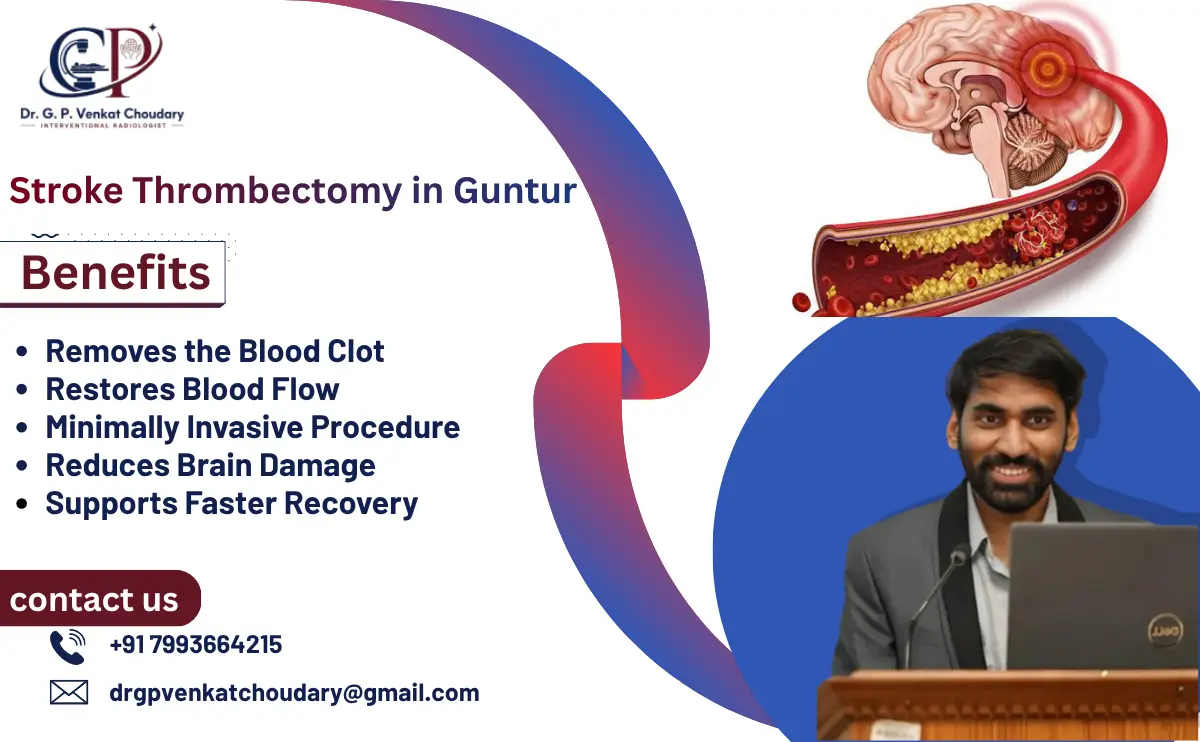
Stroke Thrombectomy: Procedure & Recovery is an important topic for patients and families seeking information about emergency treatment for certain types of ischemic stroke. A stroke can occur when a blood clot blocks an artery supplying the brain, reducing oxygen and blood flow to brain tissue. Rapid assessment and treatment are essential because prolonged interruption of blood flow can result in permanent neurological injury.
Mechanical thrombectomy is an endovascular treatment in which a specialist uses a catheter to reach the blocked blood vessel and remove the clot. Current American Heart Association/American Stroke Association guidance recognizes endovascular thrombectomy as a standard treatment for eligible patients with large-vessel occlusion, with eligibility now extending to some patients who were previously considered outside treatment criteria.
Stroke Thrombectomy: Procedure & Recovery can vary depending on the location of the clot, severity of the stroke, time from symptom onset, brain imaging findings, overall health, and the patient’s response to treatment.
For patients seeking advanced neurovascular care, Dr. G.P. Venkat Choudary, Neuro and Vascular Interventional Radiologist, provides expertise in minimally invasive neuro and vascular interventions. His services include stroke thrombectomy, brain aneurysm coiling, flow diverter placement, carotid stenting, intracranial stenting, and other image-guided vascular procedures.
Symptoms, Causes & Diagnosis of Stroke
Recognizing stroke symptoms quickly is critical. A commonly used approach is to watch for sudden facial drooping, weakness or numbness of an arm or leg, difficulty speaking, confusion, loss of balance, or sudden vision problems.
Common Symptoms of Ischemic Stroke
Symptoms may include:
- Sudden weakness or numbness, especially on one side of the body
- Facial drooping
- Difficulty speaking or understanding speech
- Sudden confusion
- Difficulty walking or maintaining balance
- Sudden dizziness
- Sudden vision changes
- Severe headache in some cases
If these symptoms appear suddenly, emergency medical evaluation is necessary. Do not wait for symptoms to improve on their own.
Causes of Ischemic Stroke
An ischemic stroke occurs when blood flow to part of the brain becomes blocked. The blockage may result from a blood clot that forms within an artery or travels from another part of the body.
Common risk factors include high blood pressure, diabetes, high cholesterol, smoking, atrial fibrillation, heart disease, obesity, and previous stroke or transient ischemic attack. Not every patient has the same risk factors, so medical assessment is important.
Diagnosis Before Thrombectomy
The medical team first determines whether the patient has an ischemic stroke and whether a major blood vessel is blocked.
Diagnostic evaluation may include:
- Neurological examination
- Blood glucose and laboratory testing
- Non-contrast CT scan of the brain
- CT angiography to identify blood-vessel blockage
- CT perfusion or MRI in selected patients
- Assessment of stroke severity and the patient’s previous functional status
Imaging helps determine whether thrombectomy may be appropriate. Earlier guidance used strict time and imaging criteria, while the 2026 AHA/ASA guideline has expanded endovascular treatment eligibility for selected patients, including some with larger ischemic cores.
Stroke Thrombectomy: Procedure & Recovery therefore begins with rapid emergency evaluation rather than directly proceeding to a procedure. The treatment decision is individualized according to the patient’s clinical condition and imaging findings.
Stroke Thrombectomy Procedure & Treatment
Stroke treatment depends on the type of stroke and the patient’s eligibility. For certain acute ischemic strokes caused by a large-vessel blockage, mechanical thrombectomy can be used to physically remove the clot and restore blood flow.
How Stroke Thrombectomy Is Performed
During the procedure, a thin catheter is usually introduced through an artery, commonly in the groin or wrist area, and guided toward the blocked blood vessel using real-time imaging.
The interventional specialist may use a stent retriever, aspiration catheter, or a combination of techniques to capture and remove the clot. Once blood flow is restored, the catheter is withdrawn and the patient is transferred for close neurological monitoring.
The exact technique depends on the location and characteristics of the blockage and the patient’s clinical condition.
Stroke Thrombectomy: Procedure & Recovery is particularly relevant when a patient or family wants to understand what happens during this minimally invasive treatment. Unlike open brain surgery, thrombectomy is performed through the blood vessels using catheter-based techniques.
Time Matters in Stroke Treatment
Stroke is a medical emergency. Treatment should be started as quickly as possible when a patient is eligible.
Earlier AHA/ASA recommendations established mechanical thrombectomy for selected patients with large-vessel occlusion within defined treatment windows, while the 2026 guideline recognizes broader eligibility for some patients based on clinical and imaging characteristics.
This does not mean every patient can receive thrombectomy many hours after a stroke. Eligibility must be determined urgently by a qualified stroke team.
Other Stroke Treatments
Depending on the situation, treatment may also include intravenous thrombolysis for eligible patients, supportive medical care, management of blood pressure and glucose, and treatment of the underlying cause of the stroke.
Thrombectomy and thrombolysis are not interchangeable treatments. Some eligible patients may receive intravenous thrombolysis before or alongside evaluation for endovascular treatment. The appropriate approach depends on the individual patient.
Benefits, Recovery, Comparison & FAQs
Stroke Thrombectomy: Procedure & Recovery involves two important stages: restoring blood flow during the emergency and providing appropriate monitoring and rehabilitation afterward.
Potential Benefits of Stroke Thrombectomy
For appropriately selected patients, thrombectomy can:
- Remove a clot blocking a major brain artery
- Restore blood flow to affected brain tissue
- Improve the chance of functional recovery
- Reduce disability associated with certain large-vessel ischemic strokes
- Provide an important treatment option when a major vessel is occluded
The 2026 AHA/ASA guideline states that endovascular thrombectomy is established as a standard treatment for acute ischemic stroke with large-vessel occlusion and supports broader treatment for selected patient groups.
The potential benefit varies from patient to patient, and thrombectomy cannot guarantee a particular recovery outcome.
Recovery After Thrombectomy
Stroke Thrombectomy: Procedure & Recovery continues beyond the catheter procedure. Patients are usually monitored closely after treatment to assess neurological status, blood pressure, the treated blood vessel, and possible complications.
Recovery may involve:
- Neurological monitoring
- Medication to reduce future stroke risk
- Physiotherapy
- Speech and language therapy
- Occupational therapy
- Swallowing assessment when required
- Management of conditions such as hypertension, diabetes, high cholesterol, or atrial fibrillation
The duration of hospitalisation and rehabilitation depends on stroke severity and the patient’s recovery.
Thrombectomy vs Conventional Medical Treatment
Mechanical thrombectomy is a catheter-based treatment designed to physically remove a clot from a blocked artery. Medical treatment may involve thrombolytic medication when appropriate, along with supportive and preventive care.
These approaches may sometimes be used together rather than viewed as competing treatments. The stroke team determines the appropriate treatment based on symptoms, imaging, timing, contraindications, and other clinical factors.
Frequently Asked Questions
1. What is a stroke thrombectomy?
Stroke thrombectomy is a minimally invasive endovascular procedure used to remove a blood clot blocking a brain artery in selected patients with acute ischemic stroke.
2. Is thrombectomy used for every stroke?
No. Thrombectomy is primarily used for selected ischemic strokes involving an appropriate arterial blockage. It is not a treatment for every type of stroke, including most hemorrhagic strokes.
3. How is a thrombectomy performed?
A specialist guides a catheter through an artery to the blocked brain vessel. A clot-retrieval device or aspiration technique may then be used to remove the blockage and restore blood flow.
4. How quickly should a thrombectomy be performed?
Stroke treatment should be initiated as quickly as possible. Eligibility depends on factors including symptom timing, neurological findings, blood-vessel imaging, brain imaging, and other clinical characteristics.
5. Is stroke thrombectomy a surgery?
It is an endovascular, minimally invasive procedure rather than open brain surgery. It is performed using catheters and image guidance.
6. What happens after thrombectomy?
Patients are closely monitored after the procedure. Further treatment may include medications, neurological observation, physiotherapy, speech therapy, occupational therapy, and management of stroke risk factors.
7. Can a patient fully recover after thrombectomy?
Recovery varies considerably. It depends on factors such as the area and extent of brain injury, how quickly blood flow was restored, the patient’s health, and rehabilitation.
8. What is minimally invasive stroke treatment?
Minimally invasive stroke treatment includes catheter-based procedures performed through blood vessels rather than through open surgery. Mechanical thrombectomy is an important example for eligible ischemic stroke patients.
9. Who performs stroke thrombectomy?
Stroke thrombectomy is performed by appropriately trained specialists working within a multidisciplinary stroke team. A Neuro and Vascular Interventional Radiologist may perform the endovascular procedure.
Conclusion
Stroke Thrombectomy: Procedure & Recovery highlights how modern endovascular treatment can provide an important option for selected patients experiencing acute ischemic stroke caused by a treatable blood-vessel blockage. Because stroke is time-sensitive, rapid recognition, emergency assessment, appropriate brain and blood-vessel imaging, and timely treatment are essential.
Dr. G.P. Venkat Choudary – Neuro and Vascular Interventional Radiologist provides minimally invasive neurovascular and vascular interventions, including stroke thrombectomy, brain aneurysm coiling, flow diverter placement, carotid stenting, intracranial stenting, and other image-guided vascular procedures.
If you or a family member has experienced stroke symptoms, seek emergency medical care immediately. For consultation regarding appropriate neurovascular intervention and treatment options, book an appointment with Dr. G.P. Venkat Choudary for an individualized evaluation.